



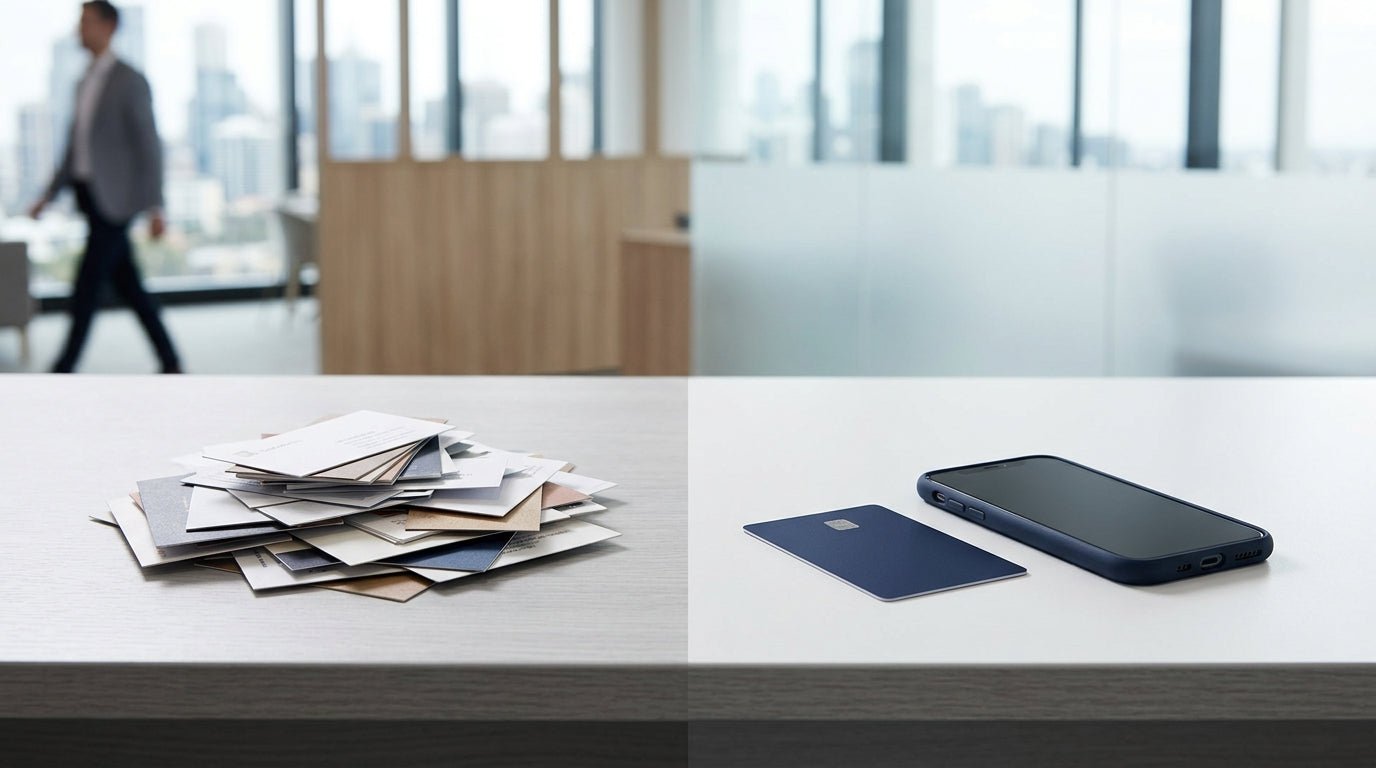

Are digital business cards a good idea for Australian professionals?
A digital business card Australia is an excellent investment for professionals because it streamlines the networking process, eliminates the recurring costs of printing, and ensures your contact information is saved directly to a lead's phone. Unlike traditional paper cards that are often lost or discarded, these electronic business cards use NFC (Near Field Communication) technology to provide a seamless, contactless way to share your details instantly.
Are digital business cards worth it?
When evaluating whether to make the switch, the primary factor is the Return on Investment (ROI). For most Australian professionals, the answer is a resounding yes. Traditional paper cards have a high 'churn' rate; statistics suggest that nearly 88% of paper cards handed out are thrown away within a week. Furthermore, every time you change your phone number, job title, or branding, you are forced to bin your existing stock and pay for a reprint.
In contrast, a Smart Tap card is a one-time purchase. Because it is a virtual business card at its core, you can update your details in real-time through an online dashboard without ever needing a new physical card. Over a three-year period, an individual professional can save hundreds of dollars, while large enterprises can save thousands in procurement and logistics.
Cost Comparison: Paper vs. Digital
- Paper Cards: $150–$300 per year (including design, printing, and shipping for multiple batches).
- Digital Business Card (Smart Tap): One-time cost of approximately $40–$60 with no mandatory ongoing subscription for basic features.
- Environmental Impact: Paper cards contribute to significant waste; digital cards are a zero-waste, eco-friendly alternative.
How do digital business cards work?
The technology behind a digital business card Australia professionals use is surprisingly simple yet powerful. Most modern cards, like those from Smart Tap, utilise NFC technology. This is the same technology that powers Apple Pay or Google Pay. When you tap your card against a modern smartphone, a link automatically triggers on the recipient's screen.
Once they tap that link, they are taken to your personalised landing page—your electronic business card. From here, they can download your contact details (VCF file) directly into their phone's address book, view your social media links, book a meeting via Calendly, or even watch a promotional video. For older phones that do not support NFC, these cards also feature a custom QR code on the back, ensuring you can connect with 100% of the people you meet.
What is the best digital business card?
The "best" card depends on your specific needs, but for the Australian market, Smart Tap has emerged as a leader. Australian professionals generally look for three things: durability, ease of use, and local support. Smart Tap offers premium matte finishes and even metal options that feel substantial in the hand, mirroring the premium feel of a high-end credit card.
Beyond the physical card, the best platforms allow for deep customisation. You should be able to add your logo, brand colours, and specific call-to-action buttons. Smart Tap’s software is designed to be intuitive, allowing you to organise your digital presence in minutes. Whether you are a real estate agent in Sydney or a tech founder in Brisbane, the ability to instantly share your LinkedIn profile or latest property listing gives you a competitive edge.
Do digital business cards work on iPhones and Androids?
Compatibility is a common concern for those new to the space. The good news is that NFC technology is now standard in almost all smartphones released after 2017. This includes iPhone XR and newer models, as well as the vast majority of Samsung Galaxy and Google Pixel devices. Because the digital business card Australia market is so mobile-centric, having a contactless card ensures you are meeting your clients where they already are: on their phones.
Why Australian professionals are moving to contactless cards
The Australian business landscape is rapidly evolving. From the coffee shops of Melbourne to the boardrooms of Perth, the 'tap to pay' culture has made us uniquely prepared for 'tap to share' networking. There is a certain level of tech-savviness expected in the modern Australian workplace. Handing over a piece of cardboard can feel outdated, whereas a sleek, branded Smart Tap card signals that you are forward-thinking and environmentally conscious.
Furthermore, the virtual business card aspect allows for better lead tracking. Some digital platforms allow you to see how many times your card has been tapped, giving you actual data on your networking efforts—something that is impossible with traditional paper.
Common objections to digital business cards
Some professionals worry that a digital card might feel impersonal. However, the opposite is often true. Because the transfer of information is so fast, it leaves more time for actual conversation. You aren't fumbling for a pen or watching someone manually type your email address into their phone (and potentially making a typo). It makes the interaction smoother and more memorable.
Others worry about privacy. Leading providers like Smart Tap ensure that you only share the information you want to share. You have full control over your profile, and you can toggle your card 'off' at any time if you lose it, ensuring your data remains secure.
Ready to upgrade your networking game?
If you are tired of carrying around stacks of paper or realise that your current card doesn't reflect your professional brand, it is time to make the switch. A digital business card Australia is more than just a trend; it is a smarter, greener, and more effective way to do business in the 21st century.
Get Your Smart Tap Card Today
Join thousands of Australian professionals who have already modernised their first impression. Explore our range of premium NFC cards and start networking smarter today. Browse the Smart Tap Collection here.
Share:
Best Digital Business Card Australia: 2026 Comparison Guide
Digital Business Card Australia: Is the ROI Worth the Switch?